
Comparing aluminum shell furnace vs. steel shell furnace for induction melting? Discover key differences in weight, efficiency, safety, and cost to choose the right furnace for your foundry.
When selecting an induction smelting furnace, one of the most consequential decisions is choosing between an aluminum shell furnace and a steel shell furnace. Both are widely used in foundry induction furnace applications — from aluminum melting furnaces to iron melting and steel melting induction furnaces — but they differ significantly in structure, performance, and operational cost.
The shell is not merely a housing. It affects magnetic efficiency, heat dissipation, operator safety, and long-term furnace power consumption. Understanding these differences helps plant managers and procurement teams make a well-informed investment.
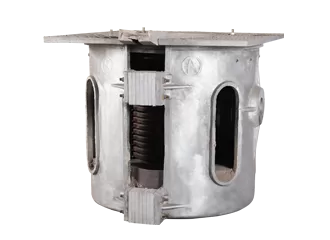
Aluminum shell furnaces are substantially lighter than their steel counterparts — typically 30–40% lighter for equivalent capacity. This makes them far easier to install, relocate, and integrate into existing foundry layouts without heavy-duty structural reinforcement.
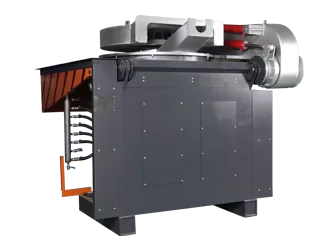
Steel shell furnaces, by contrast, offer a more robust mechanical structure suited to very large-capacity industrial induction furnaces and heavy-duty iron casting furnace or steel melting furnace operations where structural rigidity is a priority.
Verdict: For most small-to-medium aluminum melting furnace and non-ferrous metal melting furnace applications, the aluminum shell wins on installation ease and flexibility.
This is where aluminum shell furnaces hold a clear technical advantage. Because aluminum is non-magnetic, the shell does not create eddy current losses the way a steel shell can. The result is higher electrical efficiency — more of your induction heating power supply output goes directly into melting metal rather than heating the shell itself.
For facilities running continuous aluminum induction melting or copper melting furnace operations, this translates into meaningfully lower energy bills. According to the U.S. Department of Energy's Industrial Efficiency resources, reducing parasitic energy losses in melting equipment is one of the highest-impact efficiency improvements available to foundries.
Steel shell furnaces compensate with magnetic yoke assemblies — a well-designed magnetic yoke system can partially recover efficiency — but the aluminum shell design remains the benchmark for energy saving furnace performance at medium frequency ranges.
Verdict: Aluminum shell furnaces deliver superior induction furnace efficiency for most medium-frequency applications.
Workshop safety is non-negotiable. If a crucible cracks and molten metal leaks, the furnace shell material determines what happens next. An aluminum shell will melt and deform on contact with molten iron or steel, providing a visible early warning before catastrophic failure.
A steel shell furnace will not melt, but molten metal can become trapped between the coil and shell — creating serious risks of explosion if water from the induction furnace water cooling system contacts it.
For aluminum melting and non-ferrous metal melting furnace operations where melt temperatures are lower, this distinction is less critical. For iron melting induction furnace or steel induction furnace environments, proper lining monitoring and maintenance matter regardless of shell type. The Foundry Industry guidance from ASM International offers detailed best practices on furnace safety management.
Verdict: Each shell type carries different risk profiles; aluminum shells offer earlier visual warning for most melt scenarios.
Aluminum shell furnaces have fewer mechanical components — no heavy steel frame, simpler induction furnace parts inventory. Routine upkeep typically involves inspecting the induction coil, checking capacitors, monitoring the cooling circuit, and verifying the magnetic yoke condition.
Steel shell furnaces require more rigorous structural inspection over time, particularly at weld points and mounting hardware, as thermal cycling creates cumulative stress.
Both designs benefit from pairing with a quality closed cooling tower to maintain stable coolant temperatures and extend equipment life.
Verdict: Aluminum shell furnaces generally carry lower ongoing maintenance complexity for medium-scale operations.
| Factor | Aluminum Shell | Steel Shell |
|---|---|---|
| Weight | Lighter, easier install | Heavier, needs reinforcement |
| Energy Efficiency | Higher (no eddy loss in shell) | Moderate (yoke-compensated) |
| Best For | Al, Cu, non-ferrous melting | Large-scale iron & steel melting |
| Maintenance | Simpler parts inventory | More structural inspection needed |
| Cost | Lower initial & operating cost | Higher upfront investment |
For the majority of aluminum melting furnace, copper melting furnace, and non-ferrous metal melting furnace operations, the aluminum shell induction furnace delivers a compelling combination of energy efficiency, lighter weight, simpler maintenance, and lower total cost of ownership. Steel shell furnaces remain the right choice for very high-capacity iron melting and heavy industrial induction furnace environments where structural mass is an asset.
Luoyang Dinghong Electrical Technology Co., Ltd. manufactures both aluminum and steel shell induction smelting furnaces, backed by 30+ years of experience and 11 registered patents. Contact Dinghong to discuss which configuration best fits your melting operation.
Aluminum shell furnaces are well-suited for melting aluminum, copper, zinc, brass, bronze, and other non-ferrous metals. They are also used for cast iron melting furnace applications at appropriate power ratings, though very high-temperature steel melting induction furnace operations more commonly use steel shell designs.
Yes, in most medium-frequency applications. Because aluminum is non-magnetic, the shell generates no eddy current losses, meaning more power from your induction heating power supply converts directly into heat for melting — resulting in lower furnace power consumption.
Aluminum shell furnaces are available in a wide range of capacities, from small laboratory units to several-ton industrial configurations. For very large-capacity industrial melting furnaces above 10 tons, steel shell designs are more common due to structural requirements.
Key induction furnace spare parts include induction coil segments, capacitors, thyristor modules, cooling water connectors, and refractory lining materials. Keeping these in stock minimizes unplanned downtime.
Regular maintenance includes checking coolant flow rates, inspecting hose connections, cleaning filters, and monitoring inlet/outlet temperature differentials. Pairing your furnace with a reliable closed cooling tower helps maintain consistent coolant temperatures and significantly extends coil and transformer service life.


 English